
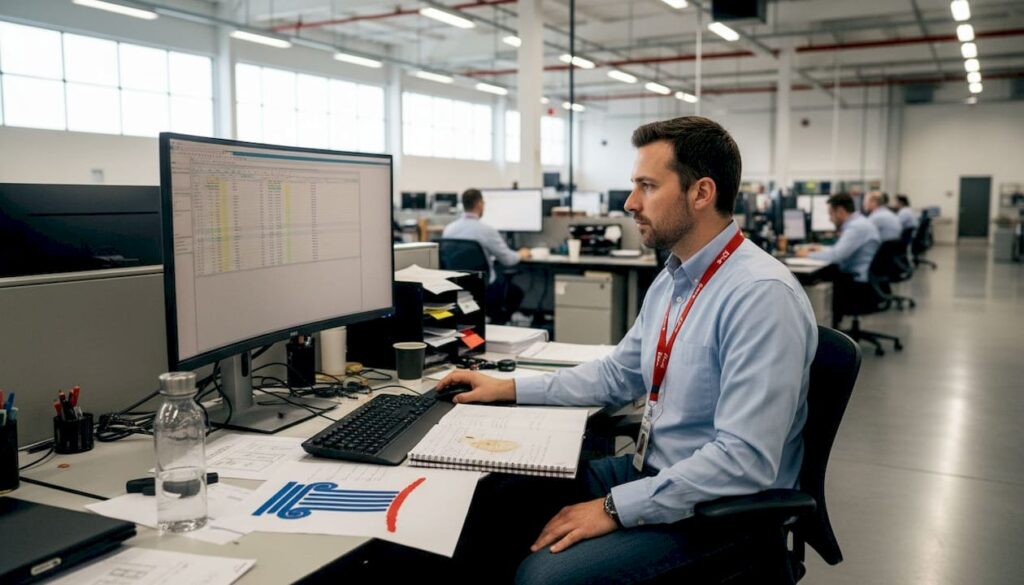
TL;DR:
- Tesla predominantly requires in-office work with limited remote monitoring, mainly during investigations.
- The xAI Hubstaff incident involved invasive monitoring on personal devices, causing employee backlash.
- Employees should request clear written policies, document concerns, and understand their legal privacy rights.
Viral headlines about Elon Musk and workplace surveillance have created real confusion for Tesla employees trying to understand what monitoring policies actually apply to them. Stories about spyware, invasive software, and remote tracking spread fast, but they often blend incidents from completely different companies under the same headline. If you work at Tesla, or advocate for workers who do, sorting fact from fiction is not just useful. It is essential. This guide breaks down what Tesla actually does, what xAI’s controversial Hubstaff rollout really involved, what California law says about your privacy, and what practical steps you can take to protect yourself.
Table of Contents
- What are Tesla’s real policies on remote work and monitoring?
- Understanding the xAI Hubstaff controversy: What really happened?
- Legal rights: What privacy protections do remote workers really have?
- Impact, pushback, and lessons: Advocacy, transparency, and next steps
- The overlooked truth: Surveillance stories are often more about broken trust than broken rules
- Get guidance on workplace privacy and employee rights
- Frequently asked questions
Key Takeaways
| Point | Details |
|---|---|
| Tesla mostly avoids remote surveillance | Tesla’s in-office focus means most employees are not subject to remote monitoring, unlike some viral stories suggest. |
| Know your rights | Employee privacy laws require employers to give notice and limit surveillance to valid business reasons, especially in California. |
| Transparency reduces conflict | Clear communication and policy documentation protect both companies and employees from trust breakdowns and legal risk. |
| Advocacy and action | Employees should document concerns, demand clarity, and consult legal counsel if policies seem overreaching or unclear. |
What are Tesla’s real policies on remote work and monitoring?
Let’s clear something up immediately. Tesla is not a remote work company. Unlike many tech employers that embraced flexible arrangements, Tesla has pushed hard in the opposite direction. Elon Musk has been vocal about requiring employees to return to the office full time, and that stance has created its own legal controversies. One Tesla employee filed suit after an RTO mandate left them completely blindsided, highlighting how abruptly these policies can shift.
Because most Tesla employees work on-site, the viral fears about remote surveillance software being pushed to home computers largely do not apply to the Tesla workforce. The company’s monitoring history is real, but it centers on in-office activity and targeted investigations rather than blanket remote tracking.
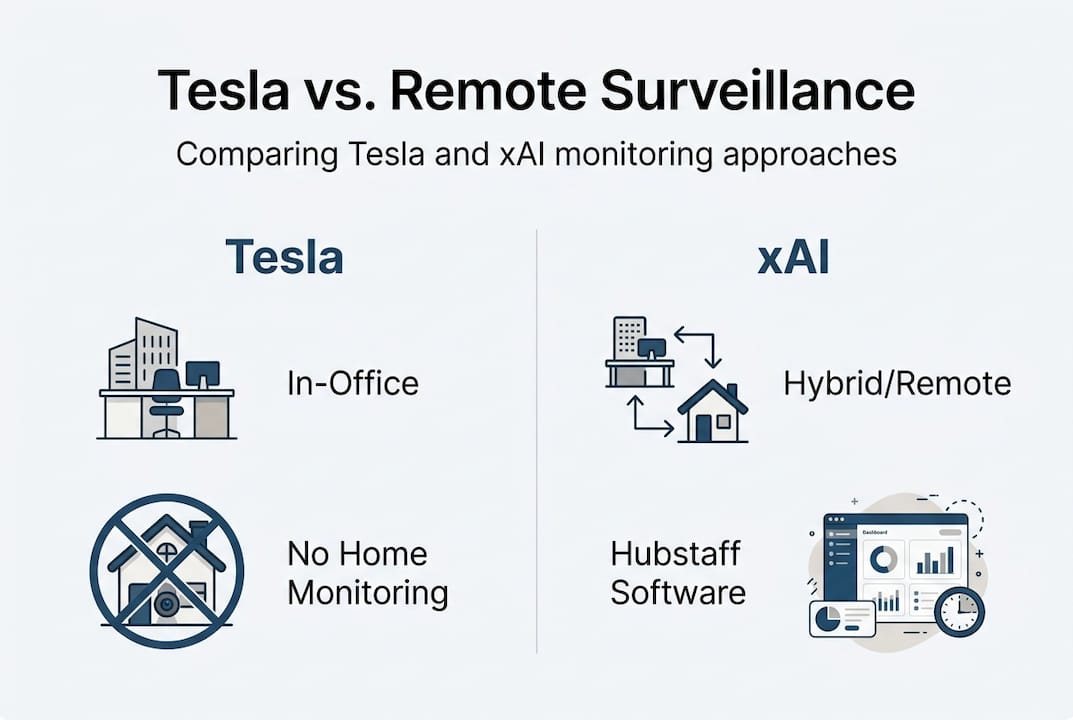
That history is worth knowing. Tesla purchased 31,000 Code42 spyware licenses and reportedly installed monitoring software on a whistleblower’s laptop after that employee raised internal concerns. That is a serious allegation and one that underscores how surveillance can be weaponized against workers who speak up, rather than used as a general productivity tool.
What Tesla employees should actually expect:
- Strong return-to-office requirements with limited remote exceptions
- Device monitoring possible during internal investigations, not as standard practice
- No confirmed company-wide remote surveillance program for the general workforce
- Whistleblower-targeted monitoring has been alleged in past legal proceedings
- Policy changes can happen fast, often without adequate notice
| Feature | Tesla | xAI |
|---|---|---|
| Primary work model | In-office (RTO mandate) | Remote and hybrid |
| Monitoring tool used | Code42 (targeted) | Hubstaff (broad rollout) |
| Who was monitored | Specific whistleblowers | Remote AI tutors |
| Employee response | Lawsuits over RTO | Threats to resign |
| Policy transparency | Low | Reactive |
Nearly 80% of companies monitor remote workers in some capacity, but Tesla sits outside that norm simply because it does not widely allow remote work in the first place. Understanding that distinction matters before you assume the worst.
Pro Tip: Before assuming you are being monitored, check your employment agreement and acceptable use policy. These documents should specify what devices and activities are subject to tracking. If they do not, that gap is worth raising with HR or an attorney.
Understanding the xAI Hubstaff controversy: What really happened?
xAI is Elon Musk’s artificial intelligence company. It is not Tesla. The two share a famous founder, but they are legally separate entities with different workforces, different cultures, and very different remote work arrangements. Conflating them is easy to do, but it leads to real misunderstandings about your rights as a Tesla employee.
In 2025, xAI required remote AI tutors to install Hubstaff, a monitoring platform that tracks URLs visited, applications used, screenshots, and activity levels. This was rolled out to workers using personal laptops, which raised the stakes considerably. Monitoring software on a company device is one thing. Requiring it on personal hardware is a much more invasive ask.
“Being asked to install software that watches everything I do on my personal computer felt like a fundamental violation of trust. I did not sign up to be surveilled in my own home.” — xAI remote worker, as reported by Business Insider
The backlash was swift. Some xAI employees threatened to resign rather than comply, and the company was forced to revisit how the rollout was handled. Here is what unfolded:
- xAI announced Hubstaff as a requirement for remote AI tutors
- Workers received little advance notice or explanation of what data would be collected
- Employees pushed back publicly and privately, citing personal device concerns
- xAI softened its approach and issued revised guidance on the monitoring scope
- The incident drew media attention and reignited broader debates about remote surveillance
The lesson here is not just about xAI. It is about how quickly trust collapses when surveillance is introduced without transparency. Workers who feel watched without consent or clear justification do not just get frustrated. They disengage, they leave, or they escalate. If you are navigating a similar situation, understanding whistleblower retaliation cases can help you recognize when pushback crosses into protected activity.
Pro Tip: If your employer introduces monitoring software, ask for written documentation of exactly what data is collected, who can access it, how long it is retained, and whether it applies to personal devices. Getting that in writing is not paranoia. It is smart.
Legal rights: What privacy protections do remote workers really have?
The legal landscape around employee monitoring is more nuanced than most people realize. Employers generally have the right to monitor work activity, but that right is not unlimited. Courts and regulators apply a balancing test: the employer’s legitimate business need weighed against how intrusive the monitoring is for the employee.
California applies some of the strictest privacy protections in the country. The state constitution explicitly recognizes privacy as a fundamental right, and that applies in employment contexts. Employment attorneys note that legal risk for employers drops significantly when they provide clear notice and limit monitoring to work hours and work-related activity. But when monitoring bleeds into personal time, personal devices, or off-hours behavior, legal exposure grows.
Understanding remote work privacy law in California is especially important if you work in Orange County or anywhere in the state, because your protections are stronger than in most other jurisdictions.
Top protections you can demand as a remote worker:
- Written notice before any monitoring begins
- Scope limitations so tracking is tied to work tasks, not personal activity
- Off-hours protection so monitoring stops when your workday ends
- Device separation so personal devices are not subject to employer tracking
- Business justification so the employer can explain why monitoring is necessary
- Data access rights so you can request what has been collected about you
The broader trend in worker monitoring shows that surveillance is expanding across industries, but legal guardrails are expanding too. Knowing where the lines are gives you power to push back effectively.
Pro Tip: Keep a personal log of when and how your employer communicates monitoring policies. Dates, formats, and exact language matter if you ever need to challenge overreach or file a complaint.
Impact, pushback, and lessons: Advocacy, transparency, and next steps
Surveillance does not just track keystrokes. It changes how people work. Workers and advocates consistently describe a chilling effect: employees self-censor, avoid legitimate breaks, and feel a constant low-level anxiety that erodes performance and morale over time. The power imbalance is real, and it compounds when workers do not know exactly what is being watched.
The Tesla data breach adds another dimension to this conversation. Tesla’s insider breach exposed 75,735 employee records, including Social Security numbers, raising serious questions about how companies handle the sensitive data they collect. Surveillance creates data. That data can be misused, leaked, or stolen. Employees are right to ask not just whether they are being watched, but what happens to the information collected about them.
“Surveillance without transparency is not a management tool. It is a control mechanism. And workers are starting to recognize the difference.” — Labor advocate perspective
If you are concerned about monitoring at your workplace, here is a practical sequence to follow:
- Review your employment agreement and company policy to understand what monitoring is authorized
- Document everything including dates, communications, and specific monitoring disclosures
- Request written clarification from HR about what data is collected and why
- Consult an employment attorney if you believe monitoring is invasive, retaliatory, or unlawful
- Explore whistleblower protections if your concerns relate to raising safety or legal issues internally
- Connect with labor advocates or worker rights organizations if collective action is appropriate
Knowing how to report retaliation is especially critical if you have raised concerns internally and believe monitoring escalated as a result. That pattern, raising a concern and then being watched more closely, is a classic retaliation scenario with legal remedies.
The overlooked truth: Surveillance stories are often more about broken trust than broken rules
Here is what most coverage of Tesla and xAI surveillance gets wrong. The outrage is rarely about the technology itself. It is about the surprise. Workers who feel blindsided by a new monitoring policy do not just feel watched. They feel deceived. That distinction matters enormously when you are trying to understand why these stories go viral and what they actually reveal.

In our experience working with employees in workplace disputes, the cases that escalate most quickly are the ones where a policy changed without warning, where management assumed consent, or where surveillance was discovered rather than disclosed. The legal question of whether monitoring was technically permitted often becomes secondary to the human question of whether the employer was honest.
The practical wisdom here is straightforward. Push for clear, written policies before any monitoring begins. Ask for documented notice. Engage management in a direct conversation about scope and purpose. Most employers who face pushback on surveillance are not villains. They are managers who underestimated how much transparency matters to their teams.
As remote work continues to evolve, proactive communication will do more to prevent conflict than any new software or court ruling. And when communication fails, knowing your rights and having access to whistleblower cases as a reference point gives you a real foundation to stand on.
Get guidance on workplace privacy and employee rights
If you are a Tesla employee, remote worker, or labor advocate dealing with surveillance concerns, you do not have to navigate this alone. At Serendib Law Firm, we help workers understand their rights, review monitoring policies for potential violations, and take action when employers cross legal lines. Whether you are facing a sudden policy change, suspected retaliation, or a data privacy concern, our Lake Forest employment lawyers and Huntington Beach workplace attorneys are ready to help. Contact us for a free consultation and find out exactly where you stand.

Frequently asked questions
Does Tesla monitor employees working remotely?
Tesla primarily enforces return-to-office mandates and does not have a confirmed company-wide remote surveillance program, though targeted monitoring has been alleged in whistleblower cases. Most Tesla employees are not working remotely and are therefore not subject to remote tracking tools.
What happened with xAI’s Hubstaff surveillance incident?
xAI, which is a separate company from Tesla, required remote AI tutors to install Hubstaff on personal laptops, triggering backlash and a partial policy revision. The incident is frequently misattributed to Tesla because both companies are associated with Elon Musk.
Are companies allowed to monitor remote workers?
Yes, generally, as long as they provide notice and have a legitimate business justification, but California adds stronger privacy protections than most states, particularly around personal devices and off-hours monitoring.
What should an employee do if they feel monitored unfairly?
Start by reviewing your company’s written policy, then document your concerns with dates and specific details, and consult an employment attorney if you believe monitoring is retaliatory or exceeds legal limits. Whistleblower protections may apply if your concerns relate to raising safety or legal issues at work.
What are the risks of workplace surveillance for personal data privacy?
Surveillance creates sensitive data that can be misused or exposed, as demonstrated when a Tesla breach exposed 75,735 records including Social Security numbers. Employees should ask employers not just what is monitored, but how that data is stored, who can access it, and what happens if it is compromised.
Recommended
- Remote Work Monitoring and Employee Privacy in Costa Mesa | Serendib Law Firm
- Whistleblower Retaliation in Tech Startups: Employee Rights | Serendib Law Firm
- Remote Work Disputes and Employee Privacy in Costa Mesa | Serendib Law Firm
- Understanding High-profile Whistleblower Cases in Silicon Valley Startups | Serendib Law Firm
- Surveillance des salariés – Groupe Prometheus – Agence Agréée