Over half of American healthcare workers say they fear retaliation after reporting misconduct. This issue is especially urgent for those in Tustin, where the stakes include both patient safety and personal job security. Understanding the real risks of whistleblower retaliation and knowing your legal rights can make the difference between silence and safeguarding ethical standards in the workplace.
Table of Contents
- Whistleblower Retaliation In Tustin Healthcare
- Common Patient-Safety Violations And Reporting Duties
- Legal Protections For Pharmacists And Medical Staff
- Employer Retaliation Tactics And Warning Signs
- Taking Action If Facing Retaliation
Key Takeaways
| Point | Details |
|---|---|
| Whistleblower Protections Are Essential | Healthcare workers in Tustin have legal protections under the California Whistleblower Protection Act to report misconduct without fear of retaliation. |
| Recognize Retaliation Tactics | Common tactics include negative evaluations, reduced hours, and creating a hostile environment to deter whistleblowing. |
| Effective Documentation is Crucial | Thoroughly document incidents, communication records, and witness statements to support any claims of retaliation. |
| Legal Recourse is Available | Workers experiencing retaliation have the right to file complaints and seek compensation for lost wages and damages. |
Whistleblower Retaliation in Tustin Healthcare
Healthcare workers in Tustin face significant risks when reporting patient safety violations or organizational misconduct. Whistleblower retaliation represents a serious threat to employees who seek to maintain ethical standards and protect patient wellbeing. California’s Whistleblower Protection Act provides critical legal safeguards for workers who expose dangerous or illegal practices within healthcare settings.
Retaliation can manifest through multiple harmful actions designed to punish reporting employees. These might include wrongful termination, demotion, harassment, reduced work hours, unfavorable shift assignments, or creating a hostile work environment. Healthcare professionals who document potential misconduct through official channels are legally protected from punitive measures by their employers.
Specifically in Tustin healthcare environments, whistleblower protections extend to reporting various serious issues such as patient neglect, unsafe medical practices, billing fraud, HIPAA violations, or systemic safety breaches. Workers who experience retaliation after making good faith reports have the right to pursue legal action, potentially recovering lost wages, reinstatement, and additional damages. Understanding your legal rights and maintaining thorough documentation are essential strategies for protecting yourself when confronting workplace misconduct.
Key protections for Tustin healthcare whistleblowers include:- Immunity from retaliatory employment actions- Right to file complaints with state and federal agencies- Potential compensation for lost wages and career damages- Protection against professional intimidation or harassment
Navigating whistleblower retaliation requires strategic legal support and comprehensive understanding of your professional rights.
Common Patient-Safety Violations and Reporting Duties
Healthcare facilities in Tustin face complex challenges in maintaining patient safety, with numerous potential violations that demand vigilant reporting and immediate intervention. Patient safety violations encompass a wide range of critical issues that can directly compromise patient health and treatment outcomes. International Patient Safety Goals provide comprehensive guidelines for identifying and addressing these critical healthcare risks.
Some of the most significant patient-safety violations healthcare professionals must report include:- Medication administration errors- Surgical mistakes or wrong-site procedures- Patient identification mistakes- Improper infection control practices- Communication breakdowns between medical teams- Patient falls or mobility-related injuries- Inadequate monitoring of patient conditions
Healthcare workers have a professional and legal obligation to document and report these violations through appropriate channels. National guidelines for patient safety incident reporting emphasize creating a transparent reporting culture that prioritizes patient welfare over individual institutional reputations. Proper documentation includes detailed incident reports, witness statements, medical records, and chronological evidence that can support potential investigations.
Successful patient safety reporting requires understanding specific protocols:1. Identify the specific safety breach or potential harm2. Document all relevant details immediately3. Report through official institutional channels4. Maintain confidentiality and professional discretion5. Follow up to ensure appropriate investigation
Healthcare professionals who consistently report safety violations play a crucial role in protecting patient welfare and maintaining high standards of medical care.
Legal Protections for Pharmacists and Medical Staff
Healthcare professionals in Tustin, including pharmacists and medical staff, enjoy robust legal protections when reporting potential patient safety violations or institutional misconduct. Whistleblower safeguards are critical in ensuring that medical professionals can speak out without fear of professional retaliation. Healthcare compliance experts emphasize the importance of understanding legal obligations that protect workers who expose potential healthcare risks.

Key legal protections for medical professionals include:- Protection from wrongful termination- Defense against professional harassment- Right to file complaints without workplace repercussions- Legal recourse for retaliatory actions- Preservation of professional credentials and reputation- Financial compensation for damages resulting from retaliation
The California Whistleblower Protection Act provides specific legal frameworks that shield state employees, including medical personnel, from potential workplace discrimination. This legislation ensures that pharmacists, nurses, technicians, and other healthcare workers can report unsafe practices, medication errors, unethical conduct, or systemic healthcare violations without compromising their professional standing.
Navigating legal protections requires understanding specific steps:1. Document all potential violations thoroughly2. Report through appropriate institutional channels3. Maintain detailed records of interactions4. Seek legal counsel specializing in healthcare whistleblower protection5. Understand your rights under state and federal laws
Professional integrity and patient safety remain paramount, and legal protections exist to support healthcare workers who courageously expose potential risks and misconduct.
Employer Retaliation Tactics and Warning Signs
Workplace retaliation represents a complex and deeply damaging strategy employers use to punish employees who expose organizational misconduct. Retaliation tactics can be subtle and sophisticated, designed to undermine an employee’s professional standing and economic security. Investigations by the HHS Office of Inspector General reveal multiple strategic approaches used by employers to discourage whistleblowing.
Common employer retaliation tactics include:- Unexplained negative performance evaluations- Sudden reduction in work hours or responsibilities- Exclusion from professional meetings or communications- Denial of promotions or professional development opportunities- Increased workplace scrutiny and micromanagement- Creating a hostile work environment- Spreading professional rumors or damaging reputation- Constructive termination strategies
Whistleblower retaliation investigations demonstrate that employers often use complex methods to disguise retaliatory actions. These tactics might include issuing clarification letters, strategically restructuring departments, or gradually diminishing an employee’s professional opportunities.
Warning signs that indicate potential workplace retaliation:1. Sudden changes in management’s communication style2. Unexplained disciplinary actions3. Isolation from team activities4. Unwarranted performance criticisms5. Unexpected job reassignments6. Increased documentation of minor workplace infractions
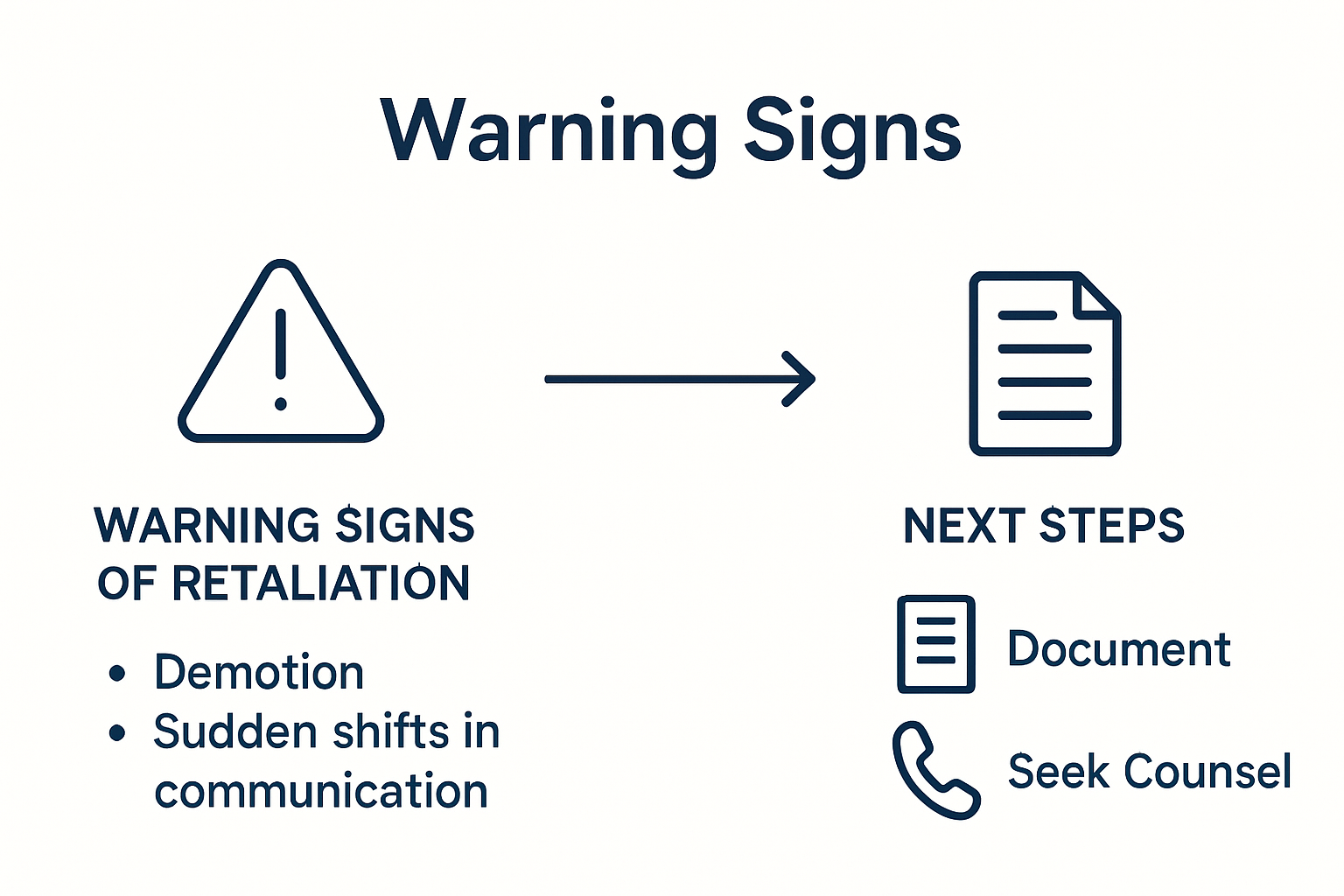
Recognizing these warning signs early can help employees protect themselves and document potential legal violations before significant professional damage occurs.
Taking Action If Facing Retaliation
Confronting workplace retaliation requires strategic and deliberate action to protect your professional rights and legal interests. Whistleblower protection involves carefully documenting and reporting retaliatory behaviors while maintaining professional composure. Guidelines from California State University provide crucial frameworks for employees navigating complex workplace challenges and potential legal interventions.
Critical initial steps when experiencing workplace retaliation include:- Documenting every incident with precise dates and details- Collecting supporting evidence like emails, performance reviews, and witness statements- Maintaining a professional and fact-based communication approach- Preserving all communication records- Identifying potential witnesses who can corroborate your experience- Tracking the timeline of retaliatory actions
Retaliation complaint procedures emphasize the importance of filing formal complaints through appropriate institutional and legal channels. This might involve submitting detailed reports to human resources, engaging workplace compliance officers, or consulting employment law attorneys who specialize in whistleblower protections.
Strategic action steps for addressing workplace retaliation:1. Consult an employment law attorney specializing in whistleblower cases2. File an official complaint with relevant state or federal agencies3. Gather comprehensive documentation of retaliatory actions4. Prepare a clear, chronological narrative of events5. Understand your legal rights and potential remedies6. Consider potential settlements or litigation strategies
Navigating workplace retaliation requires patience, strategic documentation, and a commitment to protecting your professional integrity and legal rights.
Protect Your Rights Against Whistleblower Retaliation in Tustin Healthcare
If you are facing retaliation after reporting patient safety violations or workplace misconduct in a healthcare setting, it is crucial to understand your legal protections and options. The challenges of navigating wrongful termination, harassment, or unfair work conditions can feel overwhelming but you do not have to face them alone. With serious consequences for your career and wellbeing, taking prompt action is essential.
At Serendib Law Firm, we specialize in helping healthcare professionals and employees in Tustin who suffer from retaliatory employment actions. Our experienced team advocates fiercely for whistleblowers to secure compensation and protect professional reputations. Learn more about your rights and available legal remedies by exploring our Whistleblower Retaliation Archives and Retaliation Archives. We are dedicated to personalized support and offer free consultations to help you build a strong case.
Do not wait until the retaliation worsens. Visit Serendib Law Firm today and take the first step to defend your rights and ensure your voice is heard.
Frequently Asked Questions
What is whistleblower retaliation in healthcare?
Whistleblower retaliation in healthcare refers to punitive actions taken by employers against employees who report patient safety violations or organizational misconduct. This can include wrongful termination, harassment, or adverse changes in job responsibilities.
What protections are available for whistleblowers in Tustin?
Whistleblowers in Tustin are protected under California’s Whistleblower Protection Act, which ensures that healthcare workers can report unsafe practices without fear of retaliation, including protection from wrongful termination and harassment.
How can I document a patient safety violation?
To document a patient safety violation, immediately record all relevant details, including dates, times, specific incidents, and any witnesses. Utilize official reporting channels within your healthcare facility to submit detailed incident reports.
What should I do if I experience retaliation after reporting a violation?
If you experience retaliation, document every incident with precise dates and supporting evidence, such as emails or performance reviews. Consider consulting an employment law attorney specializing in whistleblower cases and file a formal complaint with relevant state or federal agencies.