
California law generally protects employees in Orange who report suspected illegal workplace conduct, and Labor Code 1102.5 forbids retaliation for those reports. In this guide, we explain what counts as protected activity, how retaliation appears, where to file with the Labor Commissioner or the EEOC, deadlines, remedies, and next steps. Our team at Serendib Law Firm can help as your California Employment Lawyer.
TL;DR:
- An employee’s report to a supervisor or HR can qualify even when the suspected violation is unproven; retaliation includes lost shifts, exclusion, or scrutiny.
- EEOC charges generally allow 180 days, or 300 days when similar state law applies; federal employees often have 45 days to contact an EEO counselor.
- Once you show your report contributed to an adverse action, your employer must prove by clear and convincing evidence it would have acted anyway.
- Save complaints, messages, reviews, and witness details, but do not take confidential records you cannot keep or let internal procedures delay filing.
Table of Contents
- What counts as protected activity for Orange employees?
- How does retaliation show up beyond being fired?
- Where do you file in California, and how fast must you act?
- How is a retaliation claim proved, and what can you recover?
- What should you do right now to protect your claim?
- Do public sector employees in Orange County have different protections?
- Where can you find support besides filing a claim?
- How do state and federal whistleblower claims work together?
- What defenses do employers raise against retaliation claims?
- Which federal whistleblower laws apply alongside California law?
- Why Orange employees trust our approach to whistleblower retaliation
- Contact us about whistleblower retaliation in Orange
- FAQ
- Sources
What counts as protected activity for Orange employees?
Not every complaint is protected, but the law covers more than most employees expect. Under Labor Code 1102.5, your employer cannot make or enforce a rule that stops you from disclosing information to a government agency or to a person with authority over you. It also cannot retaliate when you reasonably believe the information shows a violation of law.
Protected activity can include reporting suspected violations to a government agency or to a person with authority, when you reasonably believe the information discloses a violation of law.
The test turns on your reasonable, good-faith belief. You do not have to be proven right. EEOC guidance on retaliation makes the same point for discrimination matters: participating in an investigation or serving as a witness is protected even when the underlying allegation does not succeed. Internal complaints and emails to HR can qualify, so a report you made quietly at your Orange workplace may already be protected.
How does retaliation show up beyond being fired?
Many Orange employees expect a termination letter and miss the quieter signs. Retaliation can look like:
- A demotion or loss of responsibilities
- A sudden negative performance review after years of good ones
- A reassignment to a worse shift, location, or team
- Exclusion from meetings, projects, or training
- Unusual scrutiny of your work, or threats and hostile treatment
The EEOC treats an action as retaliatory when it might deter a reasonable person from engaging in protected activity. It does not have to be an ultimate employment action like a firing.
Picture a warehouse employee who reports unsafe storage of hazardous materials. Within weeks, her overtime vanishes and her manager begins logging minor attendance issues no one tracked before. Or consider an office worker who reports falsified billing and is quietly dropped from every team email thread. Neither lost a job, yet both may have a claim.
Pro Tip: Write down each incident the same day, with the date, time, who was present, and what was said.
Where do you file in California, and how fast must you act?
The right venue depends on what you reported and what was done to you. Here is how most Orange employees should think about it:
- California Labor Commissioner (DLSE). This office handles many labor code violations, including retaliation complaints under Labor Code provisions like 1102.5. Begin here if your report concerned wages, safety, or other labor violations.
- California Civil Rights Department and the EEOC. If your matter involves discrimination or harassment, confirm which agency and process apply. Charges filed with a state agency are often dual-filed with the EEOC.
- Federal agencies for specific statutes. Some matters may involve a separate federal agency. Check the applicable agency’s rules for your situation.
- Deadlines. The EEOC says you generally must file a charge within 180 days, extended to 300 days where a state or local agency enforces a similar law. Age cases differ, and federal employees have shorter internal deadlines, often 45 days to contact an EEO counselor.
Deadlines vary by claim and agency, so confirm yours quickly. Waiting rarely helps, and evidence fades fast. Our Orange workplace retaliation lawyers page explains how local intake works.
How is a retaliation claim proved, and what can you recover?
California makes whistleblower claims easier to win than many employees assume. Under Labor Code 1102.6, you first show by a preponderance of the evidence that your protected activity was a contributing factor in the action taken against you. The burden then shifts. Your employer must prove by clear and convincing evidence that it would have taken the same action for legitimate reasons even without your report.
Statistic callout: The employer’s burden is “clear and convincing evidence,” a higher bar than the preponderance standard you carry, according to Labor Code 1102.6. In practice, that means a vague performance excuse often is not enough.
Remedies available under Labor Code 1102.5 and related statutes can include:
- Reinstatement to your position
- Back pay and lost benefits
- Other relief may be available depending on the claim
- Attorney’s fees
- Other equitable relief a court finds appropriate
Legitimate reasons can still defeat a claim when the employer meets its burden. Evidence that tends to show pretext includes timing that closely follows your report, shifting explanations for the same decision, and discipline that appears only after you spoke up.
What should you do right now to protect your claim?
The first days matter more than most people realize. Follow this order:
- Preserve everything. Save emails, texts, personnel files, performance reviews, and your own notes. Store copies somewhere your employer cannot reach, and do not take confidential material you have no right to hold.
- Build a timeline. List each protected report, then each change in treatment, with dates. A clear sequence helps connect your report to what followed.
- Document witnesses. Record names, roles, and contact details of coworkers who saw or heard relevant events.
- Use internal channels carefully. Follow your company’s complaint procedure, in writing, and keep proof you did so. Do not let internal steps run past an agency deadline.
- Talk to a California Employment Lawyer early. Bring your timeline, communications, reviews, pay records, and any written policies.
Pro Tip: Send complaints by email rather than in person, so you always hold a dated record of what you reported and to whom.
For broader background, our California employment law rights list covers other protections you may have.
Do public sector employees in Orange County have different protections?
Much of the framework overlaps, but the path can differ if you work for a city, county, school district, or another public agency in or near Orange. Labor Code 1102.5 speaks to employers broadly, so public employees reporting suspected violations can rely on it in many situations. Public-sector procedures may differ. Check the rules that apply to your employer and claim, and promptly confirm any applicable filing requirements and deadlines.
Federal employees follow a different system. Federal-sector protections, including the Inspector General Act and the Whistleblower Protection Act, forbid adverse personnel actions for protected disclosures. Statutory background on those protections appears in federal personnel law, and the Merit Systems Protection Board publishes guidance for federal whistleblowers.
If you work in the public sector, ask early which procedure governs you and which deadline comes first. Missing a short internal or claim-filing window can complicate a case that would otherwise be strong. We can help you sort out the order of steps before time runs short.
Where can you find support besides filing a claim?
A legal claim is one tool, not the only one. Reporting wrongdoing can be isolating, and Orange employees often need practical and emotional support while a matter develops. Several kinds of help sit outside the courtroom.
Government hotlines and intake lines let you report suspected violations to the agency that oversees the issue, which can create a protected record of your disclosure. Many industries also have their own compliance or ethics reporting channels, and some employers maintain anonymous lines. Use them thoughtfully, and keep copies of what you submit.
Advocacy and employee rights organizations offer education, referrals, and community. Union representatives, where you have one, can raise grievances on your behalf and sit with you in meetings. Counseling or employee assistance programs can help you manage the stress of a workplace conflict, and confiding in trusted family or friends, without sharing confidential employer information, makes a real difference.
Support resources work best alongside, not instead of, protecting your legal rights. Keep your timeline and documents current while you lean on these supports. Our Whistleblowing Retaliation archive also gathers our published material for readers who want deeper reading.
How do state and federal whistleblower claims work together?
State and federal protections often run in parallel rather than competing. A single set of facts can support a California claim under Labor Code 1102.5 and a separate federal claim, depending on what you reported and who your employer is. Each has its own agency, deadline, and remedies, so the strategy is about sequencing and preserving options.
Dual filing is one example. A charge filed with a state agency is often dual-filed with the EEOC under worksharing agreements, which can protect your federal rights while the state process moves forward. On deadlines, the EEOC explains that the 180-day window extends to 300 days where a state or local agency enforces a similar law.
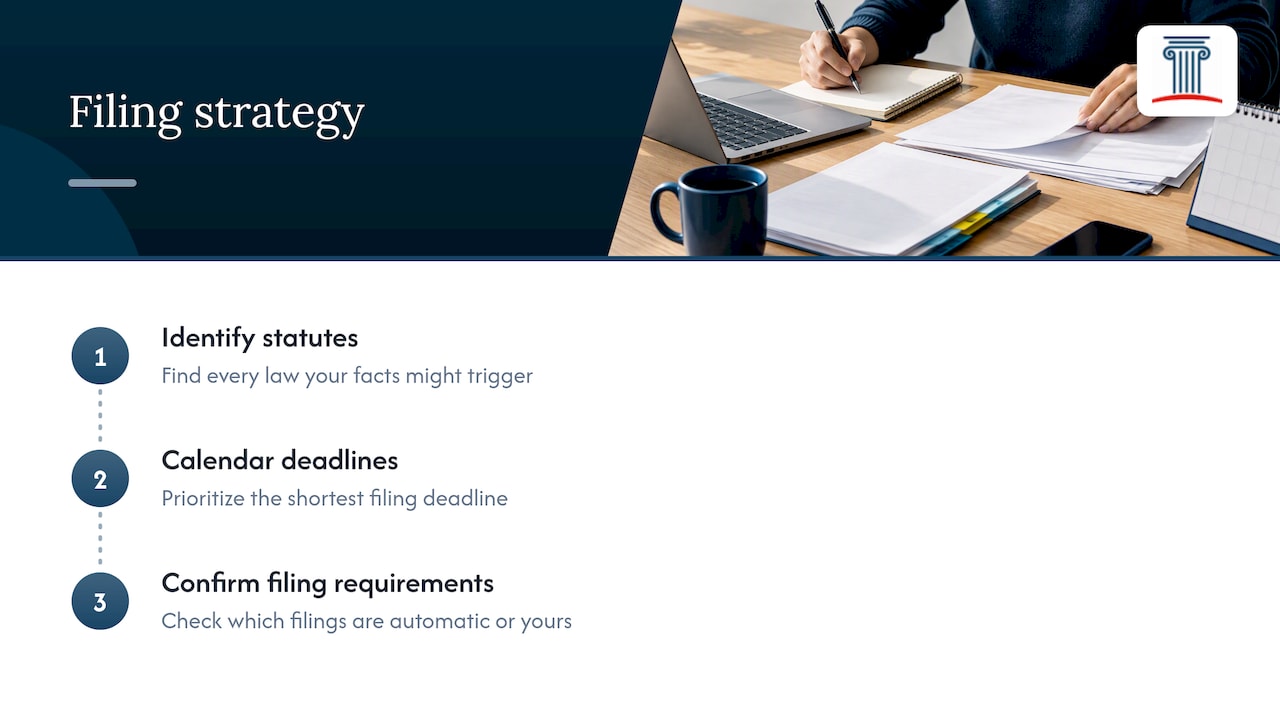
A sound approach usually starts with identifying every statute your facts might trigger, then calendaring the shortest deadline first. California’s burden-shifting rule under Labor Code 1102.6 can make the state claim especially strong, while a federal statute may offer additional remedies or a different forum in certain cases. We look at both tracks together so a choice on one does not close the door on the other.
Do not assume that filing in one place covers everything. Confirm with counsel which filings are automatic and which you must make yourself.
What defenses do employers raise against retaliation claims?
Understanding the other side’s likely arguments helps you gather the right evidence. Employers commonly point to:
- Performance or conduct problems. They claim the action followed legitimate issues, such as missed targets or policy violations.
- Restructuring or budget cuts. They say your position was eliminated for business reasons unrelated to your report.
- No causal link. They argue the decision-maker did not know about your report, or that too much time passed.
- Lack of protected activity. They contend your complaint was a personal grievance rather than a report of suspected illegality.
- Same decision anyway. They say they would have acted the same way regardless of your report.
That last defense is where California law helps you. Under Labor Code 1102.6, once you show your report was a contributing factor, the employer must carry the clear-and-convincing burden. Inconsistent explanations, sudden criticism after years of good reviews, and timing close to your report can all weaken these defenses.
Documentation is your best answer. Prior positive reviews, dated complaints, and witness accounts can undercut a performance narrative before it takes hold. We prepare for these arguments from the first intake, so your evidence addresses them directly.
Which federal whistleblower laws apply alongside California law?
Several federal statutes may apply depending on your employer and what you reported. Some reports may implicate federal whistleblower programs. The SEC’s Office of the Whistleblower publishes program rules; check the rules to see whether they apply to your situation. The SEC’s Office of the Whistleblower publishes program rules, and those rules set their own requirements for reporting and eligibility, so read them before you act.
Anti-discrimination laws enforced by the EEOC protect employees who oppose discrimination or take part in investigations. According to the EEOC’s retaliation guidance, that protection reaches witnesses and participants, even when the underlying allegation fails.
Federal employees rely on a separate framework. The Whistleblower Protection Act and related provisions govern adverse personnel actions against federal workers who make protected disclosures.
Each federal law has its own filing window, agency, and remedies, which is why reading them alongside California’s rules matters. A report that fits both systems may open more than one path. We review which federal laws your facts touch and coordinate them with your California claim.
Why Orange employees trust our approach to whistleblower retaliation
Our attorneys focus on employment law, including wrongful termination, harassment, discrimination, and retaliation, and our site reflects a steady commitment to workers across Orange County. We believe a good case starts with listening. When you reach out, we want to understand what you reported, who knew, and what changed afterward.
What you can expect from us:
- Free consultations, so you can learn your options without pressure
- English and Spanish support
- Personalized, zealous advocacy aimed at maximizing your recovery
- Clear explanations of California and federal law, deadlines included
At a consultation, we typically ask for your contemporaneous notes, emails and texts, performance reviews, and your timeline of events. Bring whatever you have; we will help organize the rest. Retaliation can leave you feeling alone, and we do not ask if your situation can be addressed, we figure out how.
Contact us about whistleblower retaliation in Orange
If you reported wrongdoing and your workplace changed afterward, we are ready to talk. Reach our California Employment Lawyer team to schedule a free consultation.
- Representation for whistleblower retaliation and related employment claims, detailed on our Employment Law page
- Free consultation and bilingual intake in English and Spanish
- Contingency-based representation available for certain employment matters
- Quick next steps: call, email, or use our online form and tell us what you have gathered
We handle other legal needs too, including personal injury, business litigation, immigration law, and disability and workers’ compensation. Call us today and tell us what happened.
This article is general information, not a substitute for advice from a qualified lawyer. Consult a qualified legal professional about your own circumstances before acting on anything here.
FAQ
Does California law protect whistleblower employees in Orange?
Yes, in most cases. Labor Code 1102.5 prohibits retaliation against employees who report suspected legal violations, whether to a government agency or to a person with authority at work. Your protection depends on a reasonable belief that the information shows a violation.
What counts as whistleblower retaliation?
Retaliation covers more than firing. Demotions, bad reviews, reassignments, exclusion from work, and hostile treatment can qualify when they might deter a reasonable person from reporting.
How long do I have to file a retaliation complaint?
It depends on the claim and the agency. For federal charges, the EEOC says you generally must file within 180 days, extended to 300 days where a state or local agency enforces a similar law. Confirm your own deadline quickly.
Who has to prove retaliation under California law?
You start by showing your protected activity contributed to the action. Under Labor Code 1102.6, your employer must then prove by clear and convincing evidence that it would have acted the same way anyway.
Should I talk to a lawyer before filing?
Speaking with a California Employment Lawyer early helps you choose the right venue and protect deadlines. We offer free consultations to Orange employees.
Sources
- California Code, LAB 1102.5
- Questions and Answers: Enforcement Guidance on Retaliation and Related Issues | U.S. Equal Employment Opportunity Commission
- Time Limits For Filing A Charge | U.S. Equal Employment Opportunity Commission