
Workplace disputes in Santa Ana, California, are governed by two overlapping legal frameworks: the California Fair Employment and Housing Act (FEHA) and the federal Civil Rights Act, specifically Title VII. Together, these laws protect employees from harassment, discrimination, and wrongful termination. Santa Ana workers have access to both state and federal remedies, and understanding which applies to your situation determines your strategy, your timeline, and your outcome. This guide explains the laws, the filing process, and the practical steps you need to take if you are facing a workplace dispute in Orange County’s most populous city.
What legal protections cover employees in California Santa Ana?
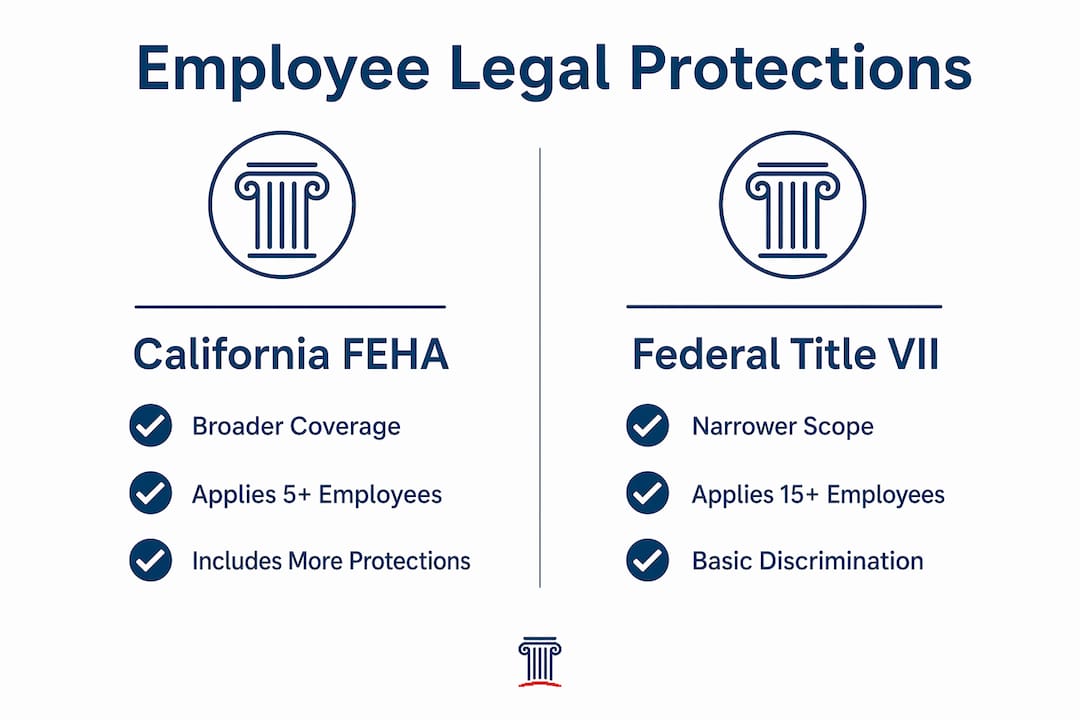
FEHA is the primary legal shield for California employees, and it offers broader protections than federal Title VII in several important ways. FEHA’s harassment protections extend to smaller employers and cover a wider range of protected characteristics than federal law, including gender identity, marital status, and military or veteran status. That broader scope matters directly to Santa Ana workers, who represent one of the most demographically diverse workforces in Orange County.

Title VII, enforced by the Equal Employment Opportunity Commission (EEOC), covers discrimination based on race, color, religion, sex, and national origin. The California Civil Rights Department (CRD), formerly known as the Department of Fair Employment and Housing, enforces FEHA at the state level. Both agencies accept complaints, and filing with one does not prevent you from pursuing remedies through the other.
The key protections available to Santa Ana employees include:
- Harassment protection: Both FEHA and Title VII prohibit hostile work environments and quid pro quo harassment based on protected characteristics.
- Discrimination protection: Employers cannot make hiring, promotion, or termination decisions based on race, sex, age, disability, religion, or national origin.
- Retaliation protection: If you report harassment or discrimination, your employer cannot legally punish you for doing so. FEHA’s retaliation protections are among the strongest in the country.
- Wrongful termination: California is an at-will employment state, but terminating an employee for a discriminatory reason or in violation of public policy is unlawful.
Pro Tip: If your employer has five or more employees, FEHA applies to your situation. Federal Title VII applies to employers with 15 or more employees. Many Santa Ana workers qualify for both protections simultaneously.
How and where do employees in Santa Ana file workplace disputes?
Filing a workplace dispute in Santa Ana involves choosing the right agency, gathering the right documents, and meeting applicable deadlines. The process is procedurally specific, and a misstep at the intake stage can limit your options later.
Here is the standard process for Santa Ana employees:
- File with the CRD or EEOC. For discrimination and harassment claims, you file a complaint with the California Civil Rights Department or the EEOC. Because California is a deferral state, federal EEOC claims must be filed within 300 days of the discriminatory act. State FEHA claims allow more time, but applicable statutes of limitations vary by case and should be evaluated individually with an attorney.
- Dual filing. Filing with the CRD automatically cross-files your complaint with the EEOC, and vice versa. This protects both your state and federal claims simultaneously without requiring two separate filings.
- File wage claims with the Labor Commissioner. If your dispute involves unpaid wages, missed breaks, or overtime violations, the California Labor Commissioner’s office handles those claims separately. Accurate employer information and a detailed listing of wage violations are required for efficient processing.
- Attend the settlement conference. After a wage claim is filed, the Labor Commissioner schedules a settlement conference. This meeting is not evidentiary, meaning no formal testimony is taken, but strategic preparation and documentation significantly improve your leverage.
- Proceed to a Berman hearing if needed. When settlement conferences fail, the Labor Commissioner schedules a Berman hearing, a quasi-judicial proceeding where evidence and testimony are presented under oath. You may have legal representation at this stage.
- Understand the appeals process. If the Labor Commissioner rules in your favor and the employer appeals, they must post a bond to do so. This bond requirement protects your recovery and discourages employers from filing frivolous appeals.
Pro Tip: The EEOC deadline is often the earliest applicable deadline in a dual-track case. Legal strategy should prioritize the earliest filing deadline unless your attorney advises otherwise based on your specific facts.
What common challenges do Santa Ana employees face in workplace disputes?
Workplace disputes rarely fail because the underlying claim is weak. They fail because employees wait too long, document too little, or misidentify the correct legal path. Understanding these pitfalls in advance gives you a real advantage.
The most frequent challenges Santa Ana employees encounter include:
- Delayed action. Many employees wait weeks or months before seeking legal advice, unaware that statutes of limitations are running. The gap between the discriminatory act and the filing date is one of the most common reasons valid claims are lost.
- Insufficient documentation. Emails, text messages, performance reviews, pay stubs, and witness names are all critical. Employees who preserve this evidence early give their attorneys far more to work with. Comprehensive documentation gathered immediately after an incident is consistently more reliable than records assembled months later.
- Misidentifying the employer. Wage claims require the legal name of the employer, not just the business name on the door. In Santa Ana’s service and retail sectors, staffing agencies and parent companies often complicate this identification. Getting it wrong delays processing.
- Underestimating retaliation. Employees who report harassment or file complaints sometimes face subtle retaliation: reduced hours, reassignment, or negative performance reviews. These acts are independently actionable under FEHA and should be documented and reported separately.
- Preparing for settlement conferences without legal counsel. The settlement conference is not a casual conversation. Employers often arrive with attorneys. Employees who treat this stage as informal frequently accept settlements far below what their claims are worth.
Santa Ana’s workforce spans healthcare, retail, manufacturing, and hospitality. Each sector carries its own patterns of dispute. Healthcare workers in Santa Ana frequently encounter wage and hour violations tied to mandatory overtime. Retail employees face harassment claims at higher rates. Knowing your industry’s common dispute profile helps you recognize problems earlier.
How does Santa Ana’s local culture and economy shape workplace disputes?
Santa Ana is the county seat of Orange County and its most populous city, with a workforce that reflects the city’s deep demographic diversity. That diversity is a strength, but it also means that language barriers, immigration status concerns, and cultural norms around authority can discourage employees from asserting their rights. Understanding this context is not just background information. It directly affects how disputes arise and how they get resolved.
The table below summarizes how Santa Ana’s key economic sectors connect to common dispute types:
| Industry sector | Common dispute type | Key legal framework |
|---|---|---|
| Healthcare and home care | Wage and hour violations, overtime | California Labor Code, FEHA |
| Retail and hospitality | Harassment, wrongful termination | FEHA, Title VII |
| Manufacturing | Safety retaliation, wage claims | Cal/OSHA, Labor Commissioner |
| Arts and creative services | Contract disputes, discrimination | FEHA, Title VII |
Santa Ana’s growing arts district and cultural economy have expanded the city’s creative workforce, bringing new workplace dynamics and, with them, new categories of employment disputes. Creative sector employees often work under informal arrangements that blur the line between employee and independent contractor status. That distinction matters enormously under California law, particularly after Assembly Bill 5 (AB5) redefined contractor classification standards statewide.
The city’s bilingual workforce is also significant. Serendib law offers legal services in both English and Spanish, which removes a critical barrier for Santa Ana employees who might otherwise struggle to communicate the details of their claims accurately. Access to a Spanish-speaking employment attorney is not a convenience in Santa Ana. For many workers, it is the difference between filing a claim and staying silent.
Key takeaways
Employees in Santa Ana have stronger legal protections under California FEHA than under federal law alone, making state filings the strategic priority in most workplace dispute cases.
| Point | Details |
|---|---|
| FEHA offers broader protections | California FEHA covers more employers and protected categories than federal Title VII. |
| Dual filing preserves both claims | Filing with the CRD automatically cross-files with the EEOC, protecting state and federal rights. |
| Documentation is decisive | Gathering emails, pay stubs, and witness names immediately after an incident strengthens every claim. |
| Settlement conferences require preparation | These meetings set the tone for later hearings; arriving unprepared costs employees leverage. |
| Employer bond deters appeals | If an employer appeals a Labor Commissioner award, they must post a bond, protecting your recovery. |
What I’ve learned from watching Santa Ana employees navigate these disputes
After years of working with employees across Southern California, the pattern I see most often is not a lack of rights. It is a lack of awareness that those rights exist and are enforceable. Santa Ana workers, particularly those in lower-wage industries or those who are newer to the country, frequently assume that what happened to them is normal or unavoidable. It is not.
The employees who get the best outcomes are not necessarily those with the strongest facts. They are the ones who act quickly, document everything, and work with attorneys who know the local legal environment. Orange County courts and agencies have specific procedural tendencies that experienced local counsel understands. A Santa Ana employment attorney who has appeared before the local Labor Commissioner office or filed with the Orange County CRD office brings practical knowledge that a general practitioner simply does not have.
One thing I tell every employee who comes to me: do not let the employer’s size or reputation intimidate you. Large retailers, hospital systems, and national manufacturers all face the same legal obligations under FEHA and Title VII as a small local business. The law does not grade on a curve. If you experienced workplace harassment or were terminated for an unlawful reason, your claim deserves serious attention regardless of who your employer is.
The most common regret I hear from employees is that they waited too long. Statutes of limitations are real, and they run whether or not you are ready. If something happened at work that felt wrong, talk to an attorney now. The consultation costs you nothing. Waiting could cost you everything.
How Serendib law helps Santa Ana employees fight back
Serendib law represents employees in Santa Ana and across Orange County in harassment, discrimination, wrongful termination, and wage claim cases. The firm’s Santa Ana employment law attorneys understand both the procedural requirements of California’s CRD and EEOC filing systems and the local dynamics that shape how disputes unfold in this city. Serendib law offers free consultations and handles select cases on a contingency basis, meaning you pay nothing unless you recover. The firm serves clients in English and Spanish. If you believe your employer violated your rights, reviewing your California employment law claims with an experienced attorney is the clearest next step you can take.
FAQ
What laws protect Santa Ana employees from workplace harassment?
California FEHA and federal Title VII both prohibit workplace harassment based on protected characteristics. FEHA provides broader protections and covers employers with as few as five employees.
Can I file with both the CRD and the EEOC for the same claim?
Yes. Filing with the California Civil Rights Department automatically cross-files your complaint with the EEOC, preserving both your state and federal claims through a single intake process.
What happens if my employer appeals a Labor Commissioner decision?
Employers who appeal a Labor Commissioner award must post a bond equal to the award amount. This requirement protects your recovery and discourages employers from filing appeals without merit.
How important is documentation in a Santa Ana workplace dispute?
Documentation is one of the most decisive factors in employment litigation. Employees who gather emails, pay stubs, performance reviews, and witness information immediately after an incident consistently achieve stronger outcomes than those who reconstruct records later.
Do I need an attorney to file a workplace complaint in Santa Ana?
You are not legally required to have an attorney to file with the CRD, EEOC, or Labor Commissioner. However, employers frequently have legal representation at settlement conferences and hearings, and working with a Santa Ana discrimination lawyer significantly improves your leverage and outcome.