
If you were hurt in a car accident in Placentia, you may be able to recover compensation for medical bills, lost income, property damage and the pain the crash has caused you. In California, that claim is generally built on proving the other driver was negligent, documenting your losses, and filing before the deadline, which is usually two years from the date of injury. What you do in the first days and weeks decides how much of that claim you can later prove.
This guide walks through how injury compensation works after a Placentia crash, which deadlines and reporting duties apply, how insurers handle claims, and when it makes sense to speak with an attorney. For a shorter overview of our approach to local crashes, see our page on car accidents in Placentia.
TL;DR
- Most California personal injury lawsuits must be filed within 2 years of the injury. Claims against a government agency start with an administrative claim and can run on much shorter clocks, sometimes as little as 6 months.
- You must report a crash to the DMV on form SR-1 within 10 days if anyone was hurt or killed, or if property damage exceeds $1,000, regardless of fault.
- Compensation can include economic losses (medical bills, lost earnings) and non-economic losses (pain, emotional distress). Your share of fault, if any, reduces the total but does not necessarily erase it.
- Insurers have deadlines too, but they are not required to offer you the best possible settlement. Get medical care and keep records before you discuss numbers.
Table of Contents
- What compensation can you recover after a Placentia car accident?
- What to do in the first days after a crash
- The 10-day DMV report: a deadline many drivers miss
- How long do you have to file a claim?
- How insurers handle your claim
- If you share some of the blame
- Estimating what a claim may be worth
- When the crash also happened at work
- Our perspective: why early guidance protects your claim
- How Serendib Law Firm can help
- Frequently asked questions
- Sources
What compensation can you recover after a Placentia car accident?
California courts describe a personal injury claim as a request for money to cover medical bills, lost wages, emotional harm and other losses caused by someone else’s actions. In a car accident case, those losses usually fall into two groups.
Economic damages
These are the losses you can prove with a document:
- Emergency room, ambulance, imaging, surgery and physical therapy bills
- Future medical care your doctors expect you to need
- Wages you lost while recovering, and reduced earning capacity if you cannot return to the same work
- Vehicle repair or replacement and other property damage
Non-economic damages
These cover what a receipt cannot: physical pain, emotional distress, sleep loss, anxiety about driving, and the loss of ordinary activities. California applies Proposition 51 to these damages, which means each defendant pays non-economic damages only in proportion to that defendant’s percentage of fault. In a crash with more than one at-fault party, such as two drivers or a driver and a vehicle owner, identifying every responsible party matters.
Who can be held responsible
The driver who caused the crash is the usual defendant. The California Courts Self-Help Guide notes that you may also be able to pursue the owner of the car if that person is different from the driver. Many people assume they sue the other driver’s insurance company directly, but California law generally requires suing the individual driver. The insurer usually pays on that driver’s behalf, which is why the insurer is who you deal with day to day.
What to do in the first days after a crash
The steps below protect both your health and your claim. None of them requires you to decide yet whether you will hire a lawyer.
- Get medical care right away. Some injuries, including whiplash, concussions and soft-tissue damage, show up hours or days later. A medical record created soon after the crash links your injury to the collision.
- Call the police if anyone is hurt. In Placentia, the Placentia Police Department responds to many local crashes, and the report it prepares becomes a key document. Ask the officer how to obtain your copy, and request it once it is available. If the crash happened on a state route or in a neighboring city, a different agency may have written the report.
- Photograph everything. Take photos of vehicle damage, the intersection or road, skid marks, traffic signals, visible injuries and your surroundings before vehicles are moved when it is safe to do so.
- Collect information. Get names, phone numbers, license plates and insurance details for every driver, plus contact details for witnesses.
- File the SR-1 with the DMV. More on this below.
- Notify your own insurer, but be careful with recorded statements to the other driver’s insurer until you understand your injuries.
- Keep a record. Save bills, pay stubs, appointment cards and a short daily note about your pain and limits.
If you were riding a motorcycle rather than driving a car, our page on Placentia motorcycle accident claims covers the additional issues riders face.
The 10-day DMV report: a deadline many drivers miss
This is one of the most misunderstood rules after a crash. The DMV requires an SR-1 report within 10 days if there was an injury, a death, or property damage over $1,000. The requirement applies even if police filed a report, because the DMV report is a separate legal duty, and missing it can lead to suspension of your driver’s license.
Fault does not change this. The DMV makes clear that who caused the accident is a separate question from whether you must report. Being the injured, not-at-fault driver does not excuse you from filing.
How long do you have to file a claim?
Deadlines are where otherwise strong cases fail. The California Courts Self-Help Guide lists 2 years from the injury for personal injury and 3 years for property damage. If you wait past the deadline, the court can dismiss your case regardless of how clearly the other driver was at fault.
When a city, county or other agency is involved
Suppose a city vehicle hit you, or a dangerous road condition contributed to the crash. Before you can sue a government agency, you must first file a claim with that agency. If the agency denies it, you have 6 months to file a lawsuit. Those notice periods are far shorter than the standard two years, so a crash involving a public vehicle or public property should be reviewed by an attorney quickly.
Is waiting six months too long?
For a typical claim against a private driver, six months is inside the two-year window. It can still hurt you. Witnesses forget, video is overwritten, and insurers read gaps in treatment as proof that you were not really injured. Waiting is rarely fatal to a claim against a private driver, but it is seldom helpful.
How insurers handle your claim
The California Department of Insurance explains the timeline in plain terms. Insurers must respond to your communications within 15 days, and generally have up to 40 days to accept or deny a claim after receiving proof of claim, such as repair estimates or a police report. The practical lesson: the clock starts when you provide documents, so the faster you organize your evidence, the faster you get an answer.
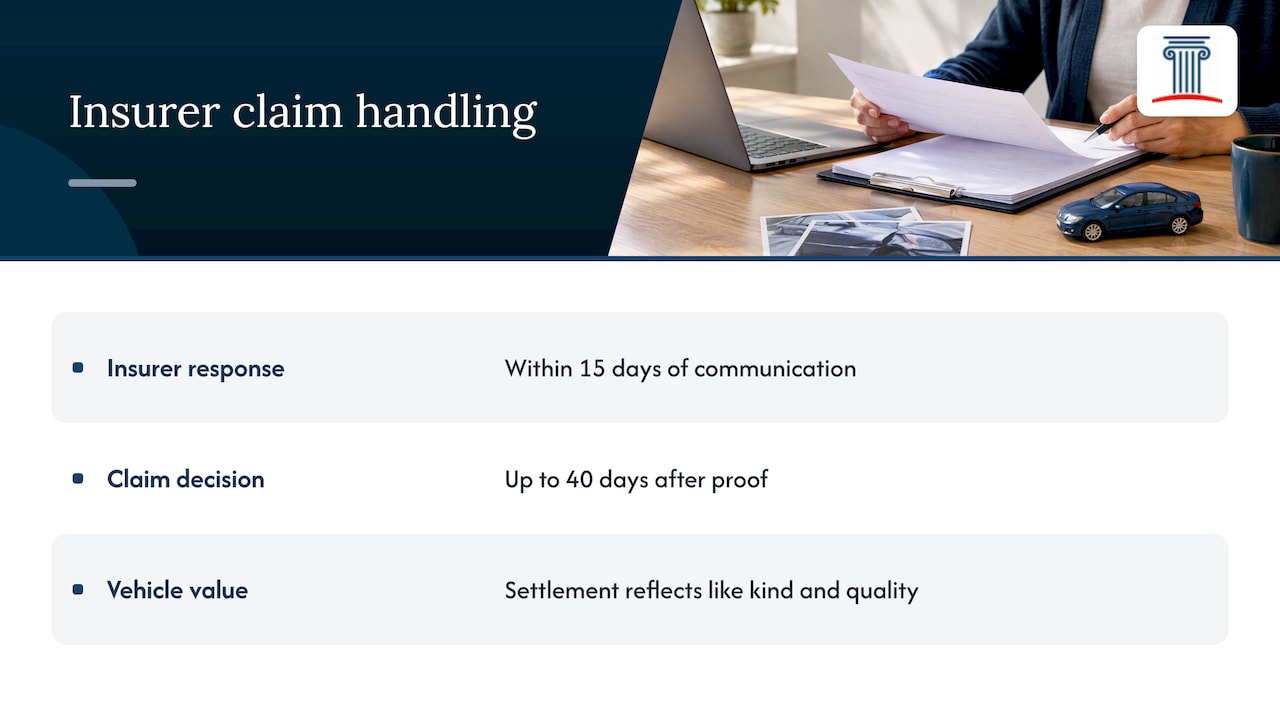
Also understand what an insurer owes you. The same guidance says a settlement should reflect the like kind and quality value of a vehicle, and insurers are not obligated to offer the best possible outcome. An early offer is a business decision, not a verdict on what your case is worth, particularly when you are still in treatment and do not know your future medical costs.
Common insurer tactics to watch for
- A quick offer before you have finished treatment
- A request for a recorded statement that invites you to downplay your pain
- Pointing to a gap in treatment or a pre-existing condition
- Arguing that you share the blame for the crash
If you share some of the blame
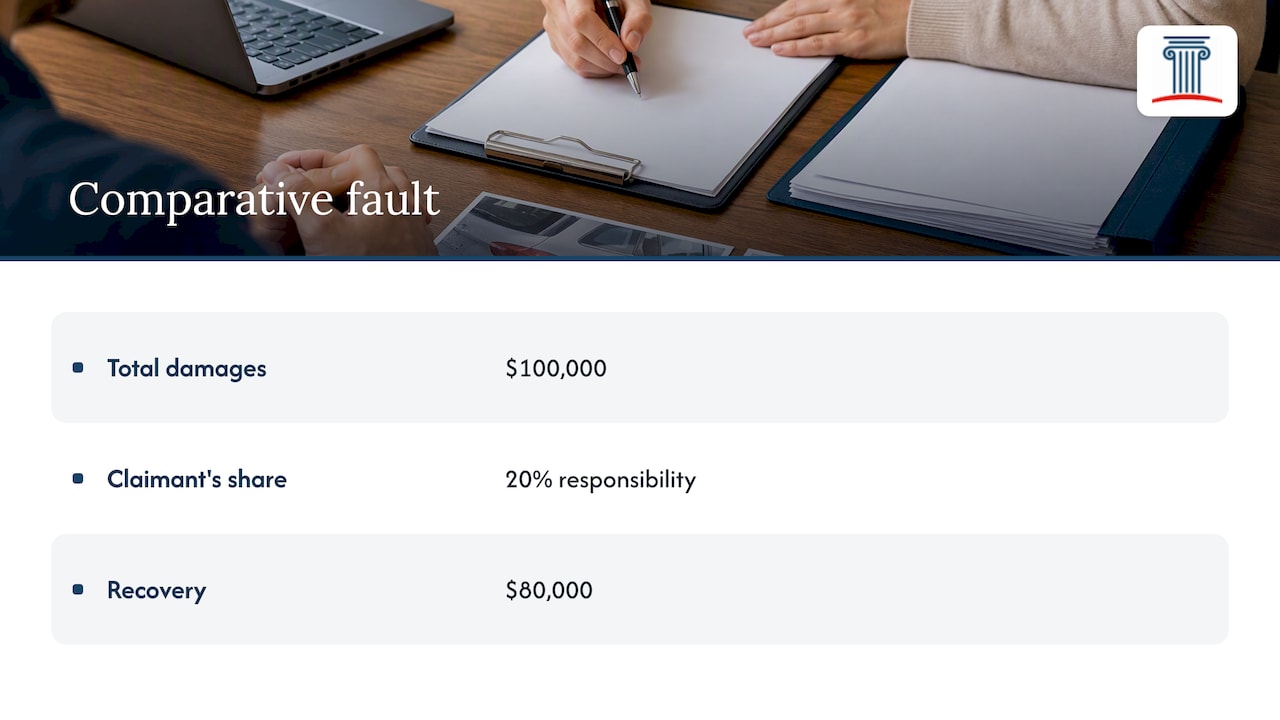
Fault is rarely all or nothing. California follows a pure comparative fault rule, which means a jury assigns a percentage of responsibility to each person and your recovery is reduced by your share. If a jury found your damages were $100,000 and you were 20% responsible, you would generally recover $80,000. We mention this because many people assume they have no case if they made any mistake at all. That assumption is usually wrong, and an insurer that suggests it may be testing you.
What the evidence shows about who did what, including the police report, photographs, vehicle damage patterns, traffic signals and witness accounts, is what moves the percentage.
Estimating what a claim may be worth
No honest attorney can quote a number before seeing your records. Value is driven by factors such as:
| Factor | Why it matters |
|---|---|
| Severity and type of injury | Fractures, spinal injuries and head injuries generally support higher claims than minor soft-tissue injuries |
| Medical costs, past and future | The documented total is the base for the economic portion |
| Time away from work | Lost earnings and reduced capacity to work |
| Recovery and permanent effects | Lasting limits raise the non-economic portion |
| Fault allocation | Your share, and other parties’ shares, adjust the result |
| Available insurance and assets | A strong claim is only collectible up to the money behind it |
That last point is why coverage matters. The Department of Insurance advises consumers to focus on specific policy components such as liability limits, medical payments and uninsured or underinsured motorist protection, not vague requests for the best coverage. If the driver who hit you carries little insurance, or none, your own uninsured or underinsured motorist coverage may become important.
When the crash also happened at work
A Placentia crash during a work errand, delivery or commute-related duty can raise a second claim: workers’ compensation. The California Division of Workers’ Compensation specifically lists getting hurt in a car accident as an example of a specific injury, meaning one event at work. In some cases you may have both a workers’ compensation claim and a personal injury claim against a third-party driver. The two systems follow different rules, so it is worth having one attorney look at both. We handle disability and workers’ compensation matters alongside injury claims.
Our perspective: why early guidance protects your claim
As a firm that represents injured people across Orange County, we see the same pattern in car accident cases. People rarely lose value because they did something dramatic. They lose it quietly: a missed DMV report, a recorded statement given while on pain medication, a gap in treatment because the bills felt overwhelming, or an early settlement signed before the full extent of an injury was known.
We believe injured people deserve an advocate who explains each step in plain language, in English or Spanish, so nothing important is lost in translation. Our approach is to start with the question of how to protect your rights and build the strongest documented case, not whether a claim is possible. Personal injury cases are handled on a contingency basis in select cases, and the initial consultation is free, so cost should not be the reason someone waits to ask questions.
If your accident happened on the border of another city, our guides for Garden Grove car accident claims and for Tustin truck collisions address local details that can differ from one place to the next.
— Maya Serkova
How Serendib Law Firm can help
If you were injured in a Placentia crash, we offer a free, bilingual consultation where we review the facts, explain the deadlines that apply to you and discuss whether a claim makes sense. Learn more about our Placentia personal injury lawyers, read about our personal injury practice, or contact us to talk to an attorney about your situation. We do not publish fixed prices, because the right arrangement depends on the case, and we will explain fees before you decide anything.
Frequently asked questions
Is waiting 6 months to sue for personal injury in California too long?
For most claims against a private driver, no: the general deadline is 2 years from the injury. The risk is practical, since evidence disappears and treatment gaps hurt credibility. If a government agency may be at fault, six months can be too late, so ask an attorney right away.
Will my insurance pay me if I am at fault?
It depends on the coverage you bought. Liability coverage pays for other people’s injuries and damage when you cause a crash, while payment for your own injuries or car depends on coverages such as medical payments or collision. Read your policy and ask your insurer which coverages apply to you.
What compensation can I get from a car accident?
You may be able to recover medical expenses, lost income, property damage and non-economic harm such as pain and emotional distress. The California Courts guide lists medical bills, lost wages and emotional harm among the losses you can ask for. The amount depends on your injuries, your documentation and fault.
Do I have to report the accident to the DMV if the police came?
Yes, if anyone was injured or killed, or property damage exceeded $1,000. The SR-1 is a separate requirement from the police report and is due within 10 days.
Sources
- Deadlines to sue someone, California Courts Self-Help Guide
- Personal injury cases, California Courts Self-Help Guide
- Before you sue someone, California Courts Self-Help Guide
- Ask a government agency to pay you, California Courts Self-Help Guide
- Report of Traffic Accident Occurring in California (SR-1), California DMV
- Financial responsibility and insurance, California DMV
- So You’ve Had an Accident, What’s Next?, California Department of Insurance
- California Department of Insurance coverage guidance
- Proposition 51, California Civil Code section 1431.2
- Fact sheet B, Division of Workers’ Compensation