
A personal injury consultation is a structured, no-obligation meeting where an attorney evaluates your legal options after a workplace injury or accident. For employees in Orange County, California, this meeting is the clearest first step toward understanding whether you have a viable claim. Most consultations last 30–60 minutes and cost nothing upfront. That combination makes the initial consultation one of the lowest-risk decisions you can make after getting hurt on the job. Serendib Law Firm, based in Orange County, offers free initial consultations for injured employees across cities including Irvine, Anaheim, and Newport Beach. This guide to personal injury consultations walks you through exactly what to expect, what to bring, and what to ask.
What does a guide to personal injury consultations actually cover?
A personal injury consultation follows a predictable structure. Understanding that structure removes the anxiety of walking into an attorney’s office without knowing what comes next.

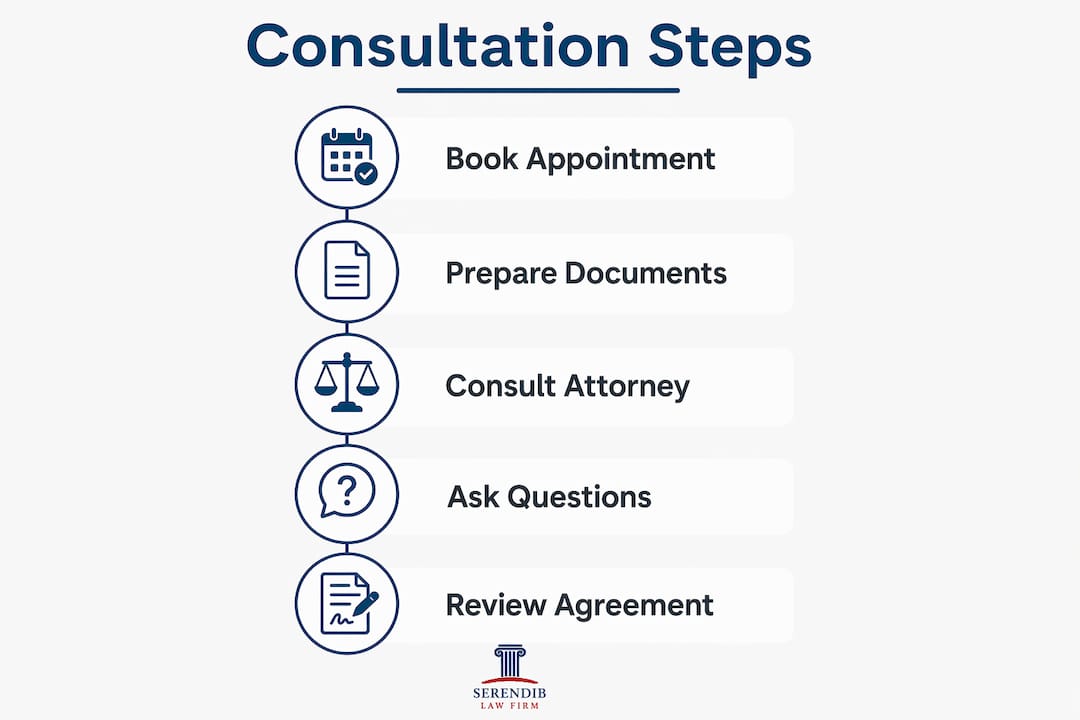
Consultations typically cover your story, your injuries, your legal options, the evidence needed, and the next steps. The attorney guides the conversation through each stage, but you drive the facts. Think of it less like a job interview and more like a focused conversation with a professional who is trying to help you.
Here is how a typical consultation unfolds:
- You share your story. The attorney listens to what happened, when it happened, and how it affected you. Do not filter or minimize details at this stage.
- The attorney asks follow-up questions. Expect questions about the accident location, your employer, the type of injury, and the medical treatment you have received so far.
- Legal options get discussed. The attorney identifies what type of claim applies, whether that is a workplace injury claim, a slip and fall, or another category under California personal injury law.
- Evidence needs are outlined. The attorney explains what documentation strengthens your case and what gaps need to be filled before moving forward.
- Next steps are defined. You leave with a clear picture of whether to pursue a claim and what the process looks like from that point.
Full honesty about all details is critical during this conversation, even if some facts feel embarrassing or complicated. Withholding information does not protect you. It creates surprises mid-process that can seriously damage your case.
Pro Tip: Write down everything you remember about the incident before the consultation, including details that seem minor. Attorneys often find the most useful facts in the parts clients almost left out.
What should you bring to your personal injury consultation?
Preparation directly affects the quality of advice you receive. An attorney who has your documents in hand can assess your case in 30 minutes. Without them, the same conversation takes longer and produces less specific guidance.
Bring the following to your first meeting:
- A written, chronological timeline. List dates, times, and the sequence of events leading up to and following the injury. A rough timeline with dates is one of the most frequently overlooked preparation steps, yet it dramatically speeds up an attorney’s assessment.
- Photos and incident reports. Workplace accident reports, police reports, and any photos of the scene or your injuries give the attorney visual and factual context.
- Medical records and billing statements. These document the nature and severity of your injuries and establish a direct link between the accident and your treatment costs.
- Insurance policies and correspondence. Bring any communications you have received from your employer’s insurer or your own insurance provider.
- Employment and wage records. If the injury caused you to miss work, documentation of lost wages strengthens your claim for economic damages.
- A prepared list of questions. Writing your questions in advance means you will not forget them when the conversation moves quickly.
Gathering documents related to your injury also helps if you are working through the emotional aftermath of a traumatic event. Resources like trauma-informed session preparation can help you organize your thoughts and paperwork before meeting with any professional.
Pro Tip: Organize your documents in the order events happened. Attorneys think chronologically, and a well-ordered file makes their job faster and your advice more specific.
What questions should you ask during your initial consultation?
The consultation is a two-way evaluation. Clients should assess the attorney on communication style and fit, not just listen to a case assessment. You are deciding whether to trust this person with a significant legal matter. Ask direct questions and pay close attention to how the attorney responds.
These are the questions that matter most:
- How much experience do you have with workplace injury claims in California? You want an attorney who knows California labor law and personal injury standards, not a generalist who handles your case as an afterthought.
- What are the strengths and weaknesses of my case? A good attorney gives you both sides. Vague or overly optimistic answers are a warning sign.
- What is your contingency fee percentage, and how are case expenses handled? Fee structure clarity protects you from surprises at settlement time.
- Who will be my main point of contact throughout the case? Some firms assign cases to junior staff after the initial meeting. Know who you will actually be working with.
- Do you expect this case to settle or go to trial? This shapes the timeline and your expectations for the process.
- What is the statute of limitations for my type of claim? California law sets deadlines for filing personal injury claims, and those deadlines vary by case type. Ask your attorney to evaluate the specific timeline that applies to your situation.
Vague or evasive answers about timelines or case strategy are a major red flag. An experienced attorney gives you practical, direct responses even when the answers are not what you hoped to hear.
How do contingency fees and case costs work?
Contingency fees are the standard payment structure for personal injury cases in California. Under this model, you pay no attorney fees unless your case results in a settlement or court award.
Contingency fees typically range from 33% to 40% of the total recovery, depending on whether the case settles before or after a lawsuit is filed. A case that goes to trial generally falls at the higher end of that range.
The distinction between fees and costs matters significantly. Fees are the attorney’s compensation. Costs are separate expenses, such as expert witness fees, court filing fees, and medical record retrieval charges.
| Item | What it means for you |
|---|---|
| Contingency fee (33%–40%) | Attorney is paid only if you recover money |
| Case expenses | Separate from fees; charged for expert witnesses, filings, and records |
| Expenses deducted before fees | Your net recovery is calculated after costs are subtracted first |
| Expenses deducted after fees | Attorney’s percentage is taken first, then costs come out of your share |
| Written fee agreement | Required before hiring; protects both parties from misunderstandings |
Whether expenses are deducted before or after the attorney’s fee significantly affects your final recovery amount. Always ask this question directly and get the answer in writing before signing any agreement.
Pro Tip: Request a written fee agreement before your second meeting. If an attorney resists putting the fee structure in writing, that resistance tells you something important.
Key Takeaways
A personal injury consultation is the most direct way for injured California employees to understand their legal rights, evaluate an attorney’s fit, and make an informed decision about pursuing a claim.
| Point | Details |
|---|---|
| Consultations are free and structured | Most reputable firms offer no-cost, 30–60 minute meetings with no obligation to hire. |
| Preparation determines advice quality | Bring a timeline, medical records, incident reports, and a written list of questions. |
| Ask direct questions about fees | Clarify whether case expenses are deducted before or after the contingency fee percentage. |
| Treat the meeting as a two-way interview | Evaluate the attorney’s communication style and transparency, not just their case assessment. |
| Honesty protects your claim | Withholding sensitive details creates surprises mid-case that can seriously weaken your position. |
What I have learned from watching clients walk into consultations unprepared
By Dimuth Amaratunge
The single biggest mistake I see injured employees make is treating the consultation as a passive experience. They show up, answer questions, and wait to be told what to do. That approach leaves them with generic advice and no real sense of whether the attorney is the right fit.
The consultation is your interview of the attorney just as much as it is their review of your case. Attorney involvement signals seriousness to insurers and can shift the dynamic of settlement negotiations, especially when cases involve complex medical evidence or employer liability disputes. That leverage only works if you hire the right attorney. You cannot assess fit if you are not asking pointed questions.
Orange County employees face a specific challenge. Workplace injury claims here often overlap with employment law issues, particularly when an employer retaliates after a workers’ compensation filing or when a third party shares liability for the accident. An attorney who handles only straightforward slip and fall cases may not be equipped for that complexity. Ask specifically about experience with workplace injury claims that involve employer conduct.
One more thing. If the attorney cannot give you a straight answer about their fee structure during the consultation, do not hire them. Transparency at the start predicts transparency throughout the case.
— Dimuth Amaratunge
How Serendib Law Firm helps injured employees in Orange County
Serendib Law Firm works with employees across Orange County, including Irvine, Newport Beach, and Anaheim, who have been injured in workplace accidents or other incidents caused by someone else’s negligence. The firm offers free initial consultations with no obligation to hire, giving you a clear picture of your legal options before you commit to anything. Attorneys at Serendib Law Firm handle cases on a contingency basis in qualifying matters, meaning you pay nothing unless your case succeeds. If you are ready to speak with an attorney about your situation, you can learn more about personal injury representation or explore your rights under California law with a direct consultation request.
FAQ
How long does a personal injury consultation last?
Most personal injury consultations last 30–60 minutes and are offered at no cost. The length depends on the complexity of your situation and how much documentation you bring.
What if I do not have all my documents ready?
You can still attend the consultation without a complete file. Bring whatever you have, and the attorney will identify what additional records are needed to fully evaluate your claim.
Do I have to hire the attorney after the consultation?
No. The initial consultation carries no obligation to hire. It is designed to give you information so you can make an informed decision on your own timeline.
How does California’s statute of limitations affect my case?
California sets legal deadlines for filing personal injury claims, and those deadlines vary by case type and circumstances. Ask your attorney to evaluate the specific timeline that applies to your situation during the consultation.
What makes a personal injury consultation different from a workers’ compensation claim?
A personal injury claim targets a negligent third party, such as a contractor, property owner, or equipment manufacturer, while a workers’ compensation claim is filed against your employer’s insurer. Both can apply to the same incident. An attorney can clarify which path, or combination of paths, fits your situation.