

If you slipped and fell on someone else’s property in Santa Ana because of a hazard the owner knew about or should have fixed, you can typically pursue compensation for medical bills, lost wages, and pain and suffering. California gives you two years from the injury date to file suit under CCP 335.1, but if the fall happened on government property, a much shorter six-month administrative claim deadline often applies first. Acting quickly, seeking medical care, documenting the scene, and speaking with a California personal injury lawyer protects both your health and your legal rights.
TL;DR:
- Preserve timestamped photos, witness details, and incident reports immediately; surveillance footage may be overwritten within days, while cleanup can erase evidence of the hazard.
- A claim requires proof of a dangerous condition, ownership or control, notice or creation of the hazard, causation, and measurable losses.
- Keep treatment continuous and save bills, wage records, and receipts; gaps can let insurers dispute injury severity or whether the fall caused it.
- California’s comparative negligence rule reduces compensation by your share of fault rather than automatically barring recovery, so document evidence that counters blame.
- Ask counsel for a settlement range, not a guaranteed figure; estimates change as treatment ends and future medical costs and lost earnings become clearer.
Table of Contents
- What damages can you recover after a Santa Ana slip-and-fall?
- How much is my Santa Ana slip-and-fall case worth?
- Who is liable and how fault is proved in California premises liability claims
- Deadlines: statute of limitations and government-claim rules you must not miss
- How an attorney helps with a Santa Ana slip-and-fall: services, fees, and timeline
- What to do in the first 48 to 72 hours after a slip-and-fall in Santa Ana
- Our Santa Ana perspective: local experience and bilingual service
- Contact Serendib Law: free consultation and next steps
- FAQ
- Sources
What damages can you recover after a Santa Ana slip-and-fall?
California premises liability law allows injured victims to pursue two broad categories of compensation, and understanding both helps you see the full scope of what a claim can cover.
Economic damages reimburse the measurable financial cost of your injury:
- Past and future medical bills, including surgery, physical therapy, and ongoing treatment.
- Lost income from missed work during recovery.
- Loss of earning capacity if the injury limits your ability to work long term.
- Rehabilitation costs and out-of-pocket expenses like medical equipment or transportation to appointments.
Non-economic damages address the harder-to-quantify toll a fall takes on your life, including pain and suffering, emotional distress, and loss of enjoyment of life. Proving these typically relies on medical records, your own testimony, and sometimes a daily-impact log documenting how the injury affects ordinary activities.
Punitive or enhanced damages are the exception rather than the rule. They generally require a showing of willful misconduct or, in certain institutional settings, a claim under elder-abuse statutes with a heightened evidentiary standard. A standard negligence-based slip-and-fall claim rarely reaches that threshold.
Falls are a leading cause of injury nationally. CDC data shows that one in four adults aged 65 and older report falling each year, and about 37% of those falls cause injuries serious enough to require medical treatment or limit activity for at least a day. Common injuries include sprains, fractures, and traumatic brain injury, all of which can support substantial medical damages when properly documented.
How much is my Santa Ana slip-and-fall case worth?
There is no fixed dollar figure that applies to every case, and anyone who promises one before reviewing your records is guessing. Instead, claims adjusters and attorneys weigh a consistent set of factors to arrive at a realistic settlement range.
- The severity of your injury and whether it requires ongoing or future medical care.
- Documented lost wages and the broader impact on your ability to work.
- Evidence of permanency, such as a doctor’s opinion on long-term limitations.
- Continuity of medical care, since gaps in treatment give insurers room to argue the injury was minor or unrelated.
Pre-existing conditions do not automatically defeat a claim, but they make continuity of care essential. A consistent chain of medical records helps separate what the fall caused from what existed beforehand.
Insurers also pay close attention to how quickly a hazard was cleaned up. A spill cleaned up before photos or witness statements are preserved can become very difficult to prove later, which is why insurance companies sometimes move fast to argue there is insufficient evidence of a dangerous condition.
Pro Tip: Ask your attorney for a settlement range, not a single number. Early estimates shift as medical treatment concludes and the full scope of economic damages becomes clear.
Who is liable and how fault is proved in California premises liability claims
To hold a property owner responsible for a Santa Ana slip-and-fall, you generally need to establish each of the following:
- A dangerous condition existed on the property.
- The defendant owned, leased, or controlled the property where the fall occurred.
- The defendant had actual or constructive notice of the hazard, or created it directly.
- The hazardous condition caused your fall.
- You suffered quantifiable damages as a result.
Judicial Council guidance on civil jury instructions emphasizes that plaintiffs must show the condition created a reasonably foreseeable risk of the kind of injury that occurred, and that the owner had notice or control over it. Notice can be shown through prior similar incidents, maintenance logs, security camera footage, employee admissions, or evidence that the hazard existed long enough that a reasonable property owner should have caught it.
Insurers commonly raise a handful of defenses: arguing the condition was open and obvious, denying notice of the hazard, or shifting blame to the claimant. Shared fault may affect your ability to recover compensation. Ask an attorney how it could apply to your claim.
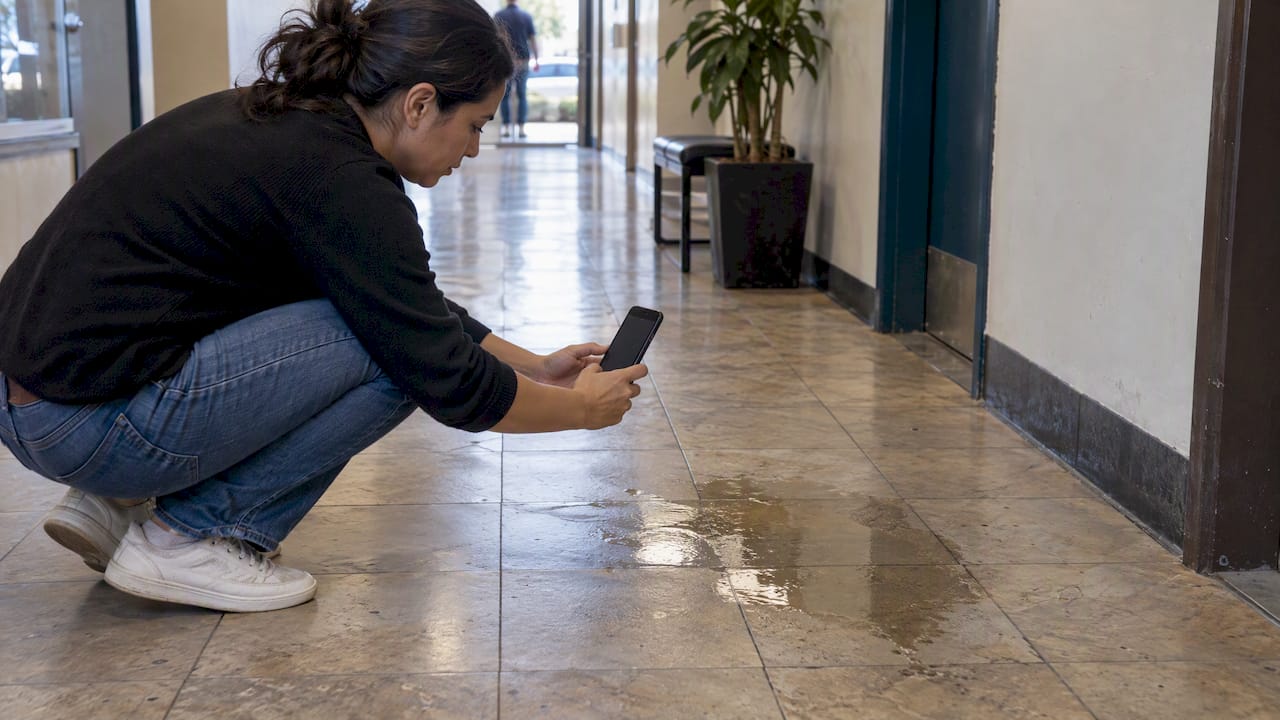
Timestamped photos, witness contact information, and a copy of any incident report all work against these defenses, which is why documenting the scene immediately matters more than almost anything else you can do.
Deadlines: statute of limitations and government-claim rules you must not miss
California law gives personal injury victims two years from the date of injury to file a lawsuit under CCP 335.1, which aligns with the standard limitation period for unpaid invoices in the UK, underscoring the importance of acting promptly to protect your rights. Miss that window and you typically lose the right to pursue compensation in court, regardless of how strong your evidence is.
If your fall happened on property owned by a government entity, a city sidewalk, a public building, or a municipal park in Santa Ana, a separate and much shorter deadline applies. The California Government Claims Act generally requires filing a formal administrative claim within six months of the incident. Missing it usually bars the lawsuit entirely, no matter how clear the liability.
Protect your claim right away:
- Request copies of all medical records and the official incident report.
- Confirm whether the property involved is publicly owned before the six-month window closes.
- Contact an attorney early to verify which deadline applies to your situation.
How an attorney helps with a Santa Ana slip-and-fall: services, fees, and timeline
An attorney handling your claim typically manages evidence preservation, demand letter preparation, settlement negotiation, filing any required administrative claim or lawsuit, retaining medical or liability experts when needed, and representing you at trial if a fair settlement cannot be reached.
- Secures surveillance footage and witness statements before they disappear or memories fade.
- Negotiates directly with insurance adjusters to counter early lowball offers.
- Coordinates with your medical providers to ensure treatment records support your claim.
- Advances case costs in many arrangements, reimbursed from the final recovery.
Most personal injury representation operates on a contingency fee, meaning you pay nothing upfront and the firm only collects a fee if you recover compensation. A free initial consultation lets you understand your options without financial risk.
Pro Tip: Bring medical records, scene photos, the incident report, and proof of lost income to your first consultation. The more documentation you have, the faster an attorney can evaluate your claim’s strength.
Getting counsel involved quickly matters because surveillance footage is often overwritten within days and witnesses become harder to locate the longer you wait.
What to do in the first 48 to 72 hours after a slip-and-fall in Santa Ana
The hours right after a fall shape the strength of your entire claim. Follow these steps as soon as you reasonably can.
- Get medical care immediately and insist on a written diagnosis, even if your injuries seem minor at first.
- Photograph the scene with timestamps, including the hazard, lighting conditions, and any warning signs or lack thereof.
- Preserve the clothing and shoes you were wearing without washing or altering them.
- Collect names and contact information from anyone who witnessed the fall.
- Report the incident to property management or staff and request a copy of any written incident report.
- Avoid giving a recorded statement to an insurance adjuster before speaking with an attorney.
- Contact a Santa Ana personal injury lawyer promptly to confirm which filing deadlines apply, especially if government property is involved.
Pro Tip: Save every receipt, from pharmacy co-pays to rideshare fares to medical appointments. Small expenses add up and strengthen your economic damages claim.
Our Santa Ana perspective: local experience and bilingual service
We represent injured clients, offering bilingual intake in English and Spanish so language is never a barrier to getting help. Our personal injury representation operates on contingency, with a free initial consultation to review your situation at no cost.
When we take on a slip-and-fall claim, we move quickly to preserve evidence, build a thorough medical record, and pursue a settlement while staying prepared to take a case to trial if an insurer refuses to offer fair value. Bringing photos, medical records, and any incident report to your consultation helps us evaluate your claim right away.
— Maya Serkova
Contact Serendib Law: free consultation and next steps
If you were hurt in a Santa Ana slip-and-fall, we offer a free consultation to walk through what happened and explain your options in plain terms. Personal injury cases may be handled on a contingency-fee basis, so you pay nothing unless we recover compensation on your behalf.
Our intake team works in both English and Spanish, and we make the process as straightforward as possible from the first call.
- Bring photos of the scene and your injuries.
- Bring medical bills and treatment records.
- Bring a copy of any incident report filed with the property owner.
Visit our Personal Injury practice page to learn more about how we handle these claims, or reach our team directly through the California Personal Injury Lawyer contact page to schedule your free consultation today.
FAQ
What is the average payout for a slip and fall in California?
Settlement values depend heavily on injury severity, medical costs, and liability evidence specific to each case, so an attorney can help evaluate your circumstances. Rather than relying on a general figure, ask an attorney to evaluate your documented medical bills, lost wages, and pain and suffering to estimate a realistic range for your situation.
What is the maximum payout for pain and suffering?
Whether a limit applies to pain and suffering damages can depend on the details of your case. Ask an attorney to review your situation. The amount depends on the severity and permanency of your injury, supported by medical evidence and documentation of how the injury affected your daily life.
How long do I have to file a slip-and-fall claim in Santa Ana?
California law generally requires filing a personal injury lawsuit within two years of the injury date under CCP 335.1. If the fall occurred on government-owned property, you typically must file a separate administrative claim within six months under the California Government Claims Act, or you may lose your right to sue entirely.
Can I still recover compensation if I was partly at fault for my fall?
Yes. California follows a comparative negligence rule, which reduces your compensation by your percentage of fault rather than barring recovery outright. An attorney can help assess how shared fault might affect your specific claim.
Do I need a lawyer to file a slip-and-fall claim?
An attorney can help you assess disputes over liability or the value of a claim and explain how documentation and negotiation may affect your options. A free consultation with a California personal injury lawyer can clarify whether representation would strengthen your case.
Sources
The deadlines and injury statistics referenced throughout this guide come from primary legal and public health sources, which you can review directly for additional detail.
- California Code, CCP 335.1
- Older Adult Falls Data | Older Adult Fall Prevention | CDC
- Judicial Council of California Civil Jury Instructions Supplement July 2026